What a Can of WD-40 Can Teach You About Making a Fortune
Got a squeaky hinge? Put some WD-40 on it. A rusty bolt that refuses to budge? Get the WD-40.
For some of us, WD-40 ranks right up there with duct tape as the answer to just about every mechanical problem known to man. And if neither one works, there's always the option of getting a bigger hammer.
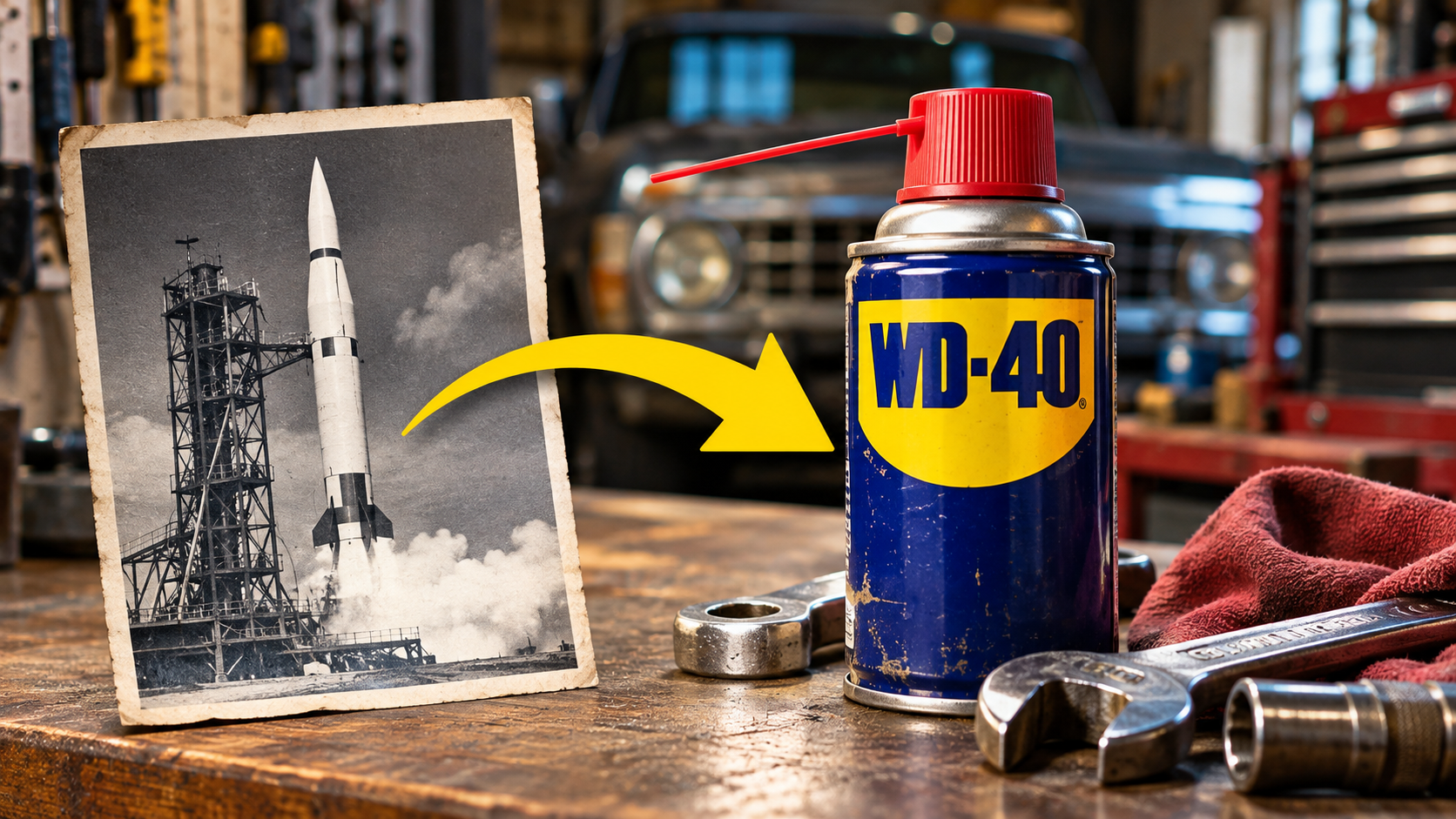
But here's something interesting about that familiar blue-and-yellow can sitting on the shelf in your garage. It wasn't originally developed for rusty bolts, squeaky hinges, or stubborn garage doors. It was developed to protect missiles from corrosion.
That's right. The product you use to quiet a squeaky door started life in the aerospace industry, where it served a very different purpose.
So how does a specialized chemical developed for missiles become a product found in millions of homes and workshops? The answer has very little to do with rocket science and everything to do with recognizing a profitable market that nobody originally intended to serve.
And if you own a successful business, it's a lesson worth your attention. Because your next major financial opportunity may come from customers you've never even considered.
From Atlas Missiles to American Garages
In 1953, three employees of a small San Diego company called Rocket Chemical Company set out to develop a formula that would prevent rust and corrosion in aerospace equipment.
They didn't get it right the first time. Or the tenth. Or even the thirty-ninth. But on their fortieth attempt, they finally developed a formula that worked.
They called it WD-40, short for Water Displacement, 40th Formula. Not exactly a name you'd expect to become a household word, but it certainly did.
One of the company's first commercial customers was Convair, an aerospace contractor that used WD-40 to protect the outer skin of the Atlas missile from corrosion.
The product worked beautifully. In fact, according to WD-40's own company history, some Convair employees liked it so much that they began sneaking cans out of the plant in their lunchboxes to use at home.
Now, think about that for a moment. You've developed a specialized chemical for the aerospace industry, and the people who use it at work are taking it home because they find it useful for completely different purposes.
You could dismiss that as an amusing little curiosity. Or you could recognize that those employees have just given you a clue about an enormous new market.
Fortunately, Rocket Chemical Company's founder, Norm Larsen, recognized the opportunity.
He experimented with aerosol cans that made the product convenient for ordinary consumers. In 1958, WD-40 appeared on store shelves in San Diego.
By 1960, the company had seven employees who sold an average of 45 cases a day from the trunks of their cars. By 1993, WD-40 could be found in four out of five American households, and the company had surpassed $100 million in annual sales.
Think about that transformation. A product developed to protect missiles from corrosion becomes something millions of people keep in their garages, workshops, and toolboxes.
The company didn't have to invent an entirely new product to reach those customers. It simply recognized that the product it already had could solve problems for people it hadn't originally intended to serve.
What If You're Selling to Only a Fraction of Your Potential Market?
Now, I doubt you're in the missile business. But I'll bet you've developed products or services for a particular type of customer, and you've built a successful company around that market.
You know who buys from you, why they buy, and how to reach them. You've probably spent years refining your approach, developing relationships, and establishing your reputation.
But have you ever seriously considered who else might benefit from what you sell? Could your product solve an expensive problem in another industry? Could your expertise be valuable to a completely different category of customer?
Perhaps you manufacture specialized equipment for industrial customers, but another industry faces an even more costly problem that your equipment could solve. Or maybe you provide a professional service to one type of business owner, while companies in another market would gladly pay a premium for the same expertise.
The opportunity may not be to sell more of what you have to the same people. It may be to discover an entirely new group of customers who have a compelling reason to buy it.
And depending on the value you provide, those customers may be willing to pay considerably more than your current market.
Your Customers May Know Something You Don't
Here's another lesson from the WD-40 story that I think deserves your attention.
The company didn't discover its household market through an elaborate research project or an expensive consulting engagement. The clue came from people who already used the product.
Those employees didn't see WD-40 exclusively as an aerospace chemical. They saw something that solved problems around the house, and they found ways to use it that went beyond its original purpose.
So let me ask you something. Do you really know all the reasons your customers buy from you?
Perhaps your customers use your product in ways you never anticipated. Maybe they value a benefit that barely receives a mention in your sales presentation, or they've recommended your services to people in industries you've never considered.
After 40 years in marketing and sales, I've learned that business owners sometimes become so accustomed to their existing markets that they overlook opportunities right in front of them.
They know who their customers are. But they may have no idea who their customers could be.
The Right Market Can Make the Same Product Worth Considerably More
Of course, discovering a potential new market doesn't automatically mean you've found a profitable one. You still need to determine whether those customers have a genuine need, the resources to purchase your offer, and a compelling reason to choose you.
But consider this hypothetical example.
Suppose you sell a product that saves your typical customer $10,000 annually. Now imagine another industry where that same product could prevent a problem that costs companies $250,000.
The product hasn't changed, but its economic value to the customer certainly has. And if you can demonstrate that value, you may have an opportunity to develop a substantially more profitable offer.
That's where market selection, positioning, and persuasion become so important. The sales message that works beautifully with one group of customers may mean absolutely nothing to another.
You have to understand what those customers want, what their problems cost them, and why your solution deserves their attention and money.
Sometimes the greatest opportunity isn't a better product. It's a better market for the product you already have.
Who Else Would Gladly Pay for What You Sell?
I'm not suggesting that every successful company has an undiscovered market as enormous as the one WD-40 found. But I am suggesting that your current customers may represent only a fraction of the people who could benefit from what you offer.
What other industries face the problems your products solve? Who else might value your expertise? And where could the results you deliver be worth considerably more than they are to your current customers?
Those questions deserve serious consideration, particularly if you've already built a profitable business and want to take it to another level.
The people at Rocket Chemical Company started with a product that protected missiles from rust. They discovered a much larger market because someone recognized the significance of employees who wanted to take that product home.
Your next major source of revenue may already exist in the products, services, and expertise you have today. The question is whether you've identified everyone who would gladly pay for them.
Let's Find Your Next Profitable Market
You've already built a successful business with products or services that customers value. But there may be entire markets you've never explored, including customers who would place an even greater value on what you provide.
At Conquest Marketing & Sales, we help successful business owners who sell high-value products and services identify profitable market opportunities and develop persuasive strategies to reach them.
You know your business. I bring 40 years of experience in marketing, sales, strategy, and persuasion. Let's find out who else might gladly pay for what you sell and what that opportunity could be worth to you.
Let's Talk About Your Business →
Russell J. Martino is a marketing and sales strategist, direct-response copywriter, and author of Persuade. Profit. Repeat.